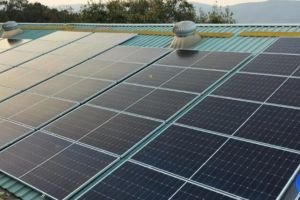
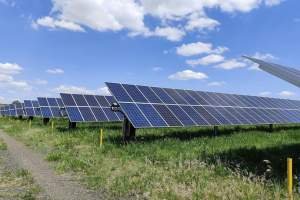
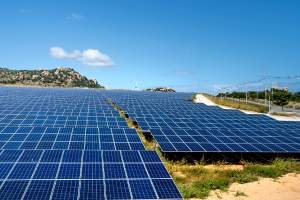
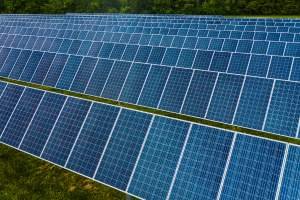
India’s solar-module manufacturing is nearing breakeven with around 65% capacity use and could reach about 143 GW in export potential by 2030.
Better cost competitiveness, lower shipping costs, and cleaner production help India’s global position, though prices are still 14–17% higher than China and Southeast Asia.
India’s solar-module manufacturing is nearing breakeven at about 65% capacity utilization and could hit an export potential of ~143 GW by 2030, according to EUPD Research.
Improved cost competitiveness, reduced freight costs, and strong emissions credentials for Europe boost India’s role as a global supply chain hub, despite prices still being 14-17% higher than China and Southeast Asia.

Solar-powered cold storage cuts energy costs and boosts reliability using sun power, batteries, and tech for steady cooling in remote spots.
It lowers waste, cuts pollution, and helps farmers with government aid despite setup costs and training needs.
भारत की सौर ऊर्जा उत्पादन क्षमता अब 125 गीगावॉट तक पहुंच गई है, जिससे देश विश्व में तीसरे स्थान पर आ गया है।
उत्तर प्रदेश ने भी सौर ऊर्जा क्षेत्र में तेज प्रगति की है – राज्य में बड़े पैमाने पर रूफटॉप सोलर पैनल लगाए गए हैं और पीएम सूर्य घर योजना के तहत करोड़ों रुपये की सब्सिडी दी गई है।
India asks for worldwide teamwork to give Small Island Developing States better access to solar power and clean energy for stronger energy security.
It pushes for sharing technology, training people, and money help so these islands use less fossil fuels and handle climate changes better.
Scientists have set a new efficiency record for perovskite solar cells, reaching 27.2% efficiency by adding a chemical called potassium binoxalate that keeps chlorine ions spread out evenly.
This small change also makes the cells last much longer, with the devices keeping 86.3% of their original output after running for 1,529 hours under full sunlight.
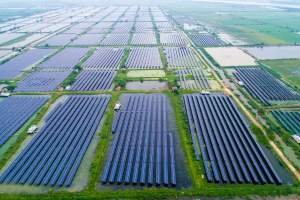
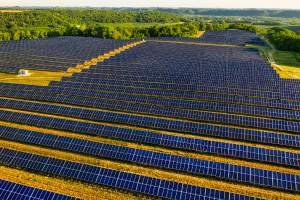
Large-scale or utility solar projects provided about 81.5% of these new installations.
India added about 24.5 GW of solar power capacity between January and December 2024, more than double the capacity added in 2023, according to JMK Research & Analytics.
Wind power grew by around 3.4 GW in the same period, taking total annual renewable additions (solar + wind) to nearly 27.9 GW and pushing India’s total installed renewable capacity past 210 GW by the end of 2024.
In Q4 (January-March) of FY 2024-25, India generated a total of 512.2 billion units (BU) of electricity, with renewable energy sources contributing 124.9 BU, which is about 24.4% of the total electricity generated.